Case Study
Investment Climate Reform Facility — British Council (Team Leader)
Context
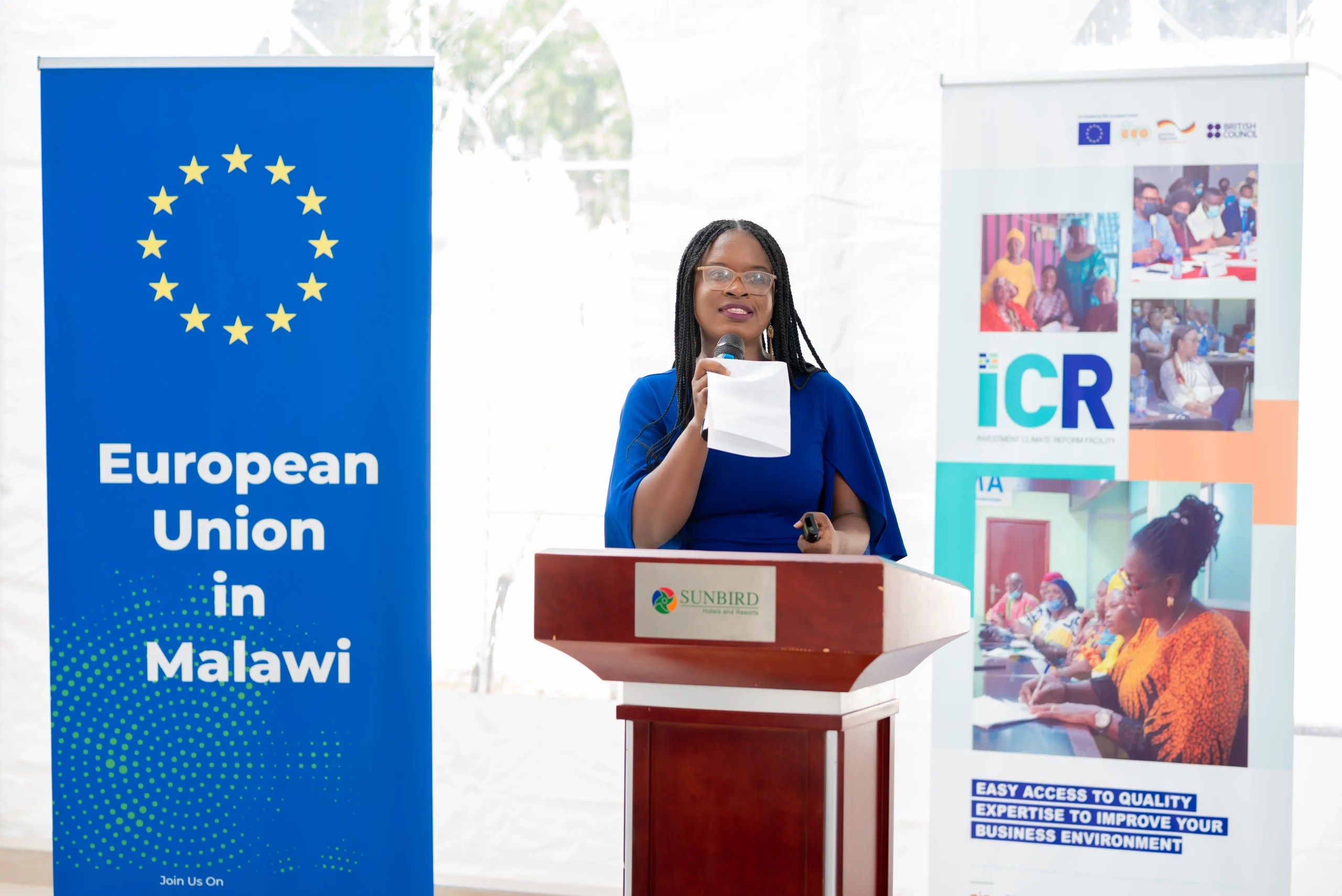
Multi-agency EU/OACPS/BMZ/British Council funded programme supporting ACP governments and private sector to strengthen business-environment reform with a focus on WEE/YEE.
What i led
As British Council Team Leader, I provided overall leadership of the British Council ICR team (governance, partner alignment, delivery systems, MEL), led British Council’s TA work (OA1), and contributed to all British Council-led Knowledge Hub initiatives (OA3) alongside GIZ, Expertise France and SNV—embedding EDI/cultural-relations across delivery.
How we did it
- Access to finance for women-owned MSMEs — created diagnostic tools and checklists and worked with national agencies to mainstream gender-responsive finance (Nigeria, Botswana).
- GBV-free, women-led workplaces — ran gender audits, model policies and CEO/board engagement that strengthened GBVH policy adoption and women’s leadership pipelines (Malawi, Zimbabwe).
- MSMEs growth — policy design, implementation, monitoring and evaluation (Nigeria, Barbados)
- Social enterprise reform — supported the social enterprise sector, research, frameworks, policy drafts and legal frameworks (Jamaica, Ghana, Kenya, Ethiopia)
- Creative economy reform — supported culture/creative-industry policy updates and anti-piracy strategies with gender equality embedded (Uganda, Zimbabwe, Jamaica).
- Inclusive PPD and youth/women advocacy — institutionalised results-oriented PPD and co-created national agendas/platforms with strong youth/women representation (Botswana, Ghana, Namibia).
- Gender-sensitive sector/investment strategies — integrated WEE/YEE into national strategies and sector roadmaps (Tuvalu, Tonga).
Knowledge into practice —lessons into tools, training, and peer networks (P4WEE, IAG), and ensured continuity via handovers to ICR Global Gateway, DCED, IYBA, Atingi.
What Changed
Women’s and youth economic empowerment (WEE/YEE) moved from optional to portfolio standard; inclusive PPDs became institutional practice; and national mechanisms (e.g., MSME coordination, gender-sensitive investment, social-enterprise recognition) gained traction—while trained networks and hosted products kept reforms moving post-programme.