At the Elizka Relief Foundation, we have a simple belief: the next generation of leaders in Ghana shouldn’t just study global affairs—they should be equipped to change them. Our programmes are designed to move beyond the classroom, giving students the tools to stop watching from the sidelines and start driving the global conversation.
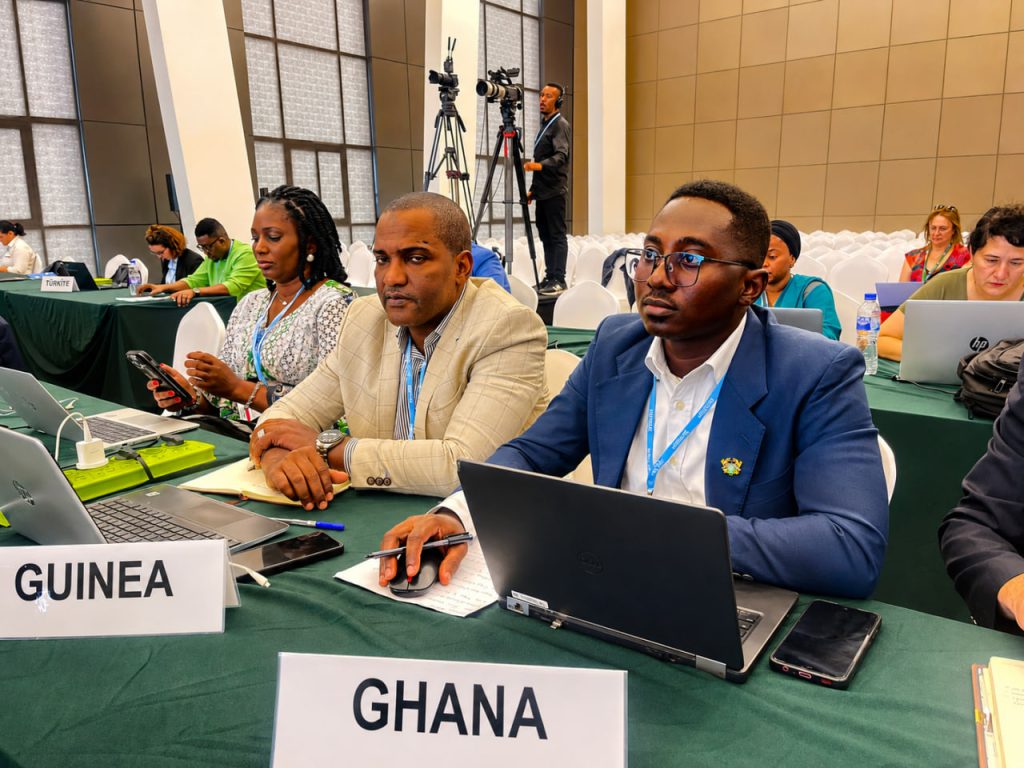
Taking Our Seat at the UN
We don’t just talk about the United Nations; we take our youth to it. We organize direct, hands-on visits to UN offices globally, giving participants the chance to step into the heart of international decision-making.
When our students sit in on the UN Security Council or the General Assembly, abstract concepts of “diplomacy” suddenly become real. They see how resolutions are hammered out and how negotiations happen behind closed doors. They realize that their own voices are valid on an international stage. These trips are an eye-opener; they shift a student’s perspective from local concerns to global responsibility.
The Model UN Experience
Back home in Ghana, we lean heavily into Model United Nations (MUN). It’s not just an academic simulation; it’s a high-pressure environment where students must think on their feet.
Whether they are representing a country or drafting a policy memo, our participants are forced to do three things:
Listen deeply: Understanding the “why” behind another nation’s position.
Debate fairly: Using logic and research rather than volume to win an argument.
Build consensus: Finding common ground when it seems impossible.
The Power of Technology for Development (ICT4D)
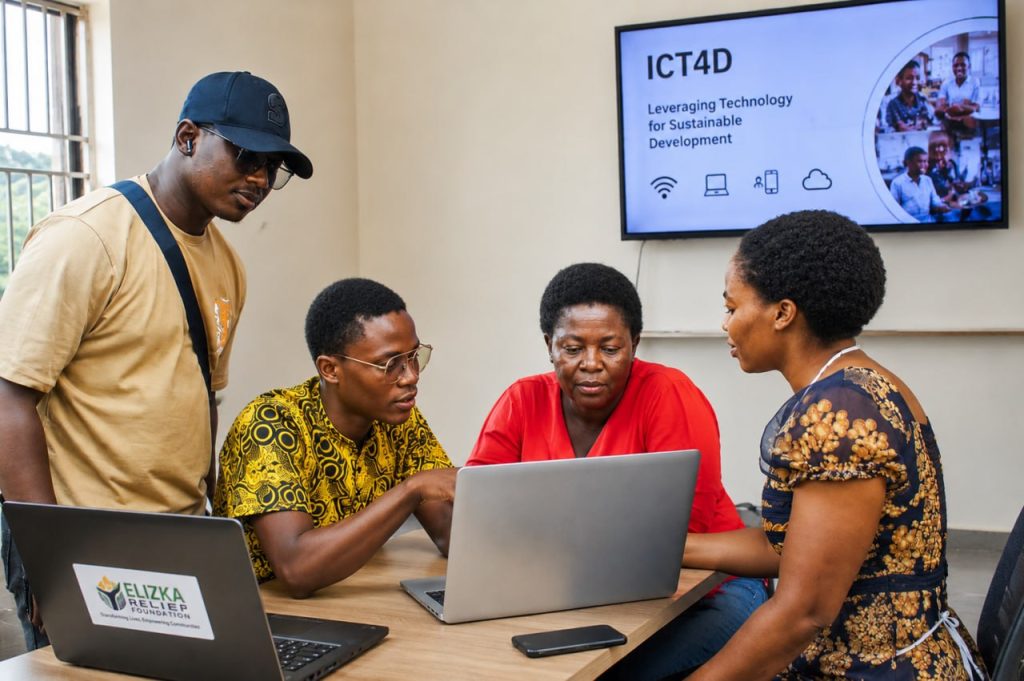
We believe that passion without data is often ineffective. That is why we are training our youth to be “Digital Restorationists.” We integrate ICT4D into our programmes to ensure our participants aren’t just advocates, but innovators.
Our students learn to leverage digital tools—such as mobile monitoring apps for biodiversity, GIS mapping for tracking environmental degradation in River Basins, and data-driven storytelling—to turn local problems into global policy solutions. We don’t just teach them to speak; we teach them to use technology to gather evidence, amplify their message, and monitor progress in real-time. By mastering these digital tools, they become the bridge between modern technology and traditional conservation.
Bridging the Global to the Local
While we look to the global stage for inspiration, our feet are firmly planted in the soil of Ghana. Global diplomacy is empty if it doesn’t solve local problems. That is why our work is inextricably linked to our environmental mission in Ghana.
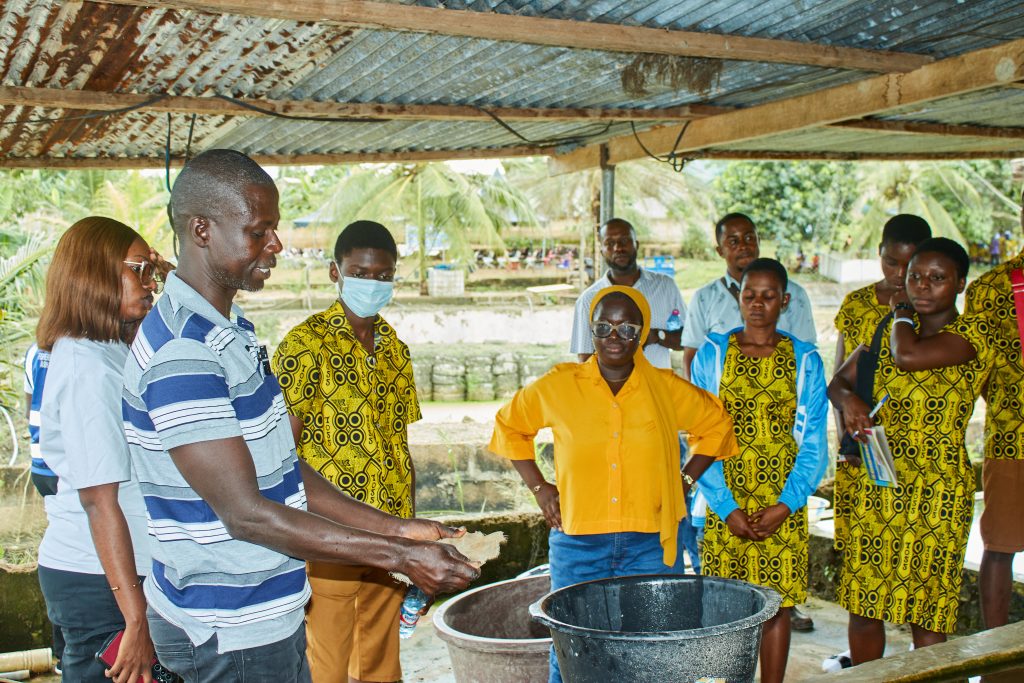
In partnership with our local Traditional Councils, we guide our youth on how to navigate the intersection of traditional governance and modern policy. We show them how to respect our customs while utilizing tech-forward strategies to lead the charge for sustainable land management and aquaculture.
Launching Careers
We view these programmes as the first step in a much longer journey. By the time they finish, our participants are individuals with the skills and the drive to tackle the big goals the United Nations has set for the world—from restoring our riparian buffers to ensuring sustainable food security.
We are building a pipeline of leaders who understand that the future of Ghana and the future of the world are fundamentally linked. We are training the generation that will hold both the gavel of the UN, the data of the digital age, and the shovel of the restorationist.
Join the Movement
Are you a student ready to find your voice, or an educator looking to get your school involved? We want to hear from you: programmes@elizkafoundation.org
Agribusiness for Sustainable Growth
At the Elizka Relief Foundation, we view agribusiness as more than just farming. It is the vital link between our natural resources and the economic sovereignty of our people. From food safety and climate resilience to global market access, we are moving beyond the traditional export of raw commodities. We are building a sophisticated, coordinated system that keeps value where it belongs: in our local communities.
Climate-Smart Agribusiness
Traditional farming in River Basin is increasingly threatened by erratic rainfall, soil degradation, and changing weather patterns. To thrive, we must adapt. Our agribusiness model integrates climate-smart practices that de-risk investment and protect our landscape for the next century. We are not just producing food; we are actively restoring the ecosystems that support that food production.
By prioritizing agroforestry, riparian buffer management, and efficient water use, we ensure that our agricultural output remains stable even in a changing environment. This is our commitment: to ensure every hectare farmed is matched by a commitment to soil health and biodiversity.
The Nexus: Youth, Technology, and Agriculture
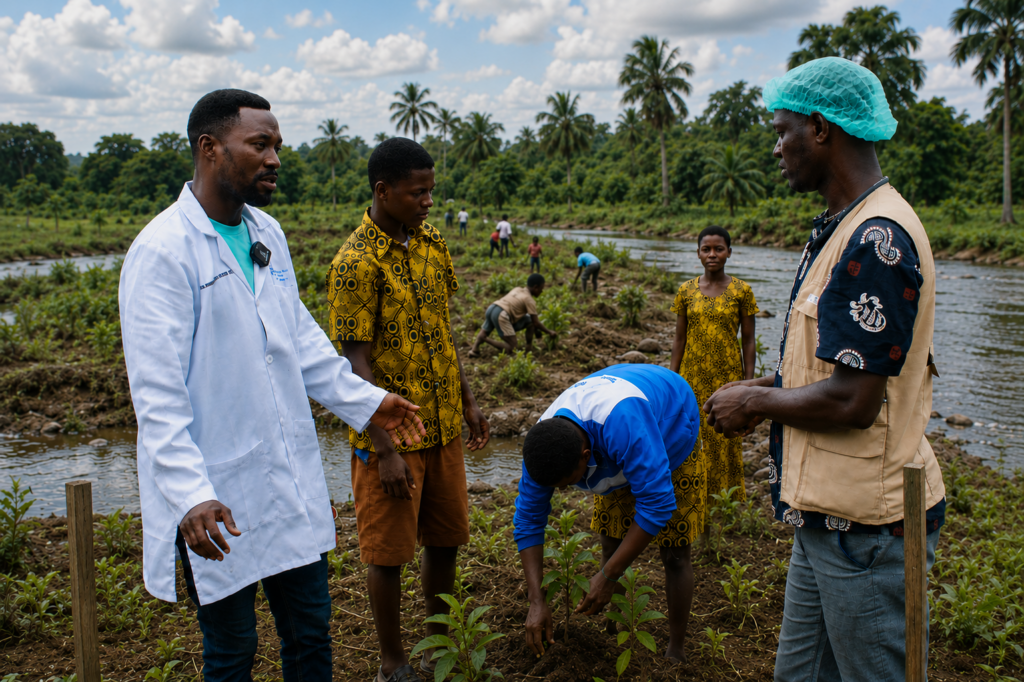
We have bridged the gap between our different programmes to create a “practical laboratory” for development. We don’t see Youth Development, ICT, and Agribusiness as separate pillars; we see them as an integrated engine for growth.
We are transforming the perception of farming from a “subsistence struggle” to a “technological career path.” Our youth are being trained as “Digital Restorationists,” leveraging mobile monitoring apps, GIS mapping, and data-driven logistics to manage our agro-processing hubs.
By moving from raw material export to local processing—such as our work in catfish canning and packaging—we are teaching our youth to master the entire value chain. They learn that technology is the bridge between traditional farming and modern commercial success.
Community-Led Stability
Agricultural development often faces hurdles related to land tenure and community acceptance. At Elizka, we have a distinct advantage. Because we operate in close collaboration with the Asanteman Council and local Traditional Authorities, our projects benefit from secure community oversight and long-term traditional stewardship.
This “social license to operate” is our greatest asset. It ensures that our agribusiness investments are not just legally sound, but culturally integrated and community-protected. We honor our customs while utilizing tech-forward strategies to lead the charge for sustainable land management.
Partner with Us
We are building a dynamic, tech-enabled, and environmentally conscious industry that creates sustainable livelihoods. We aren’t just farming for today; we are building the industrial base that will propel our local productive sectors into the future.